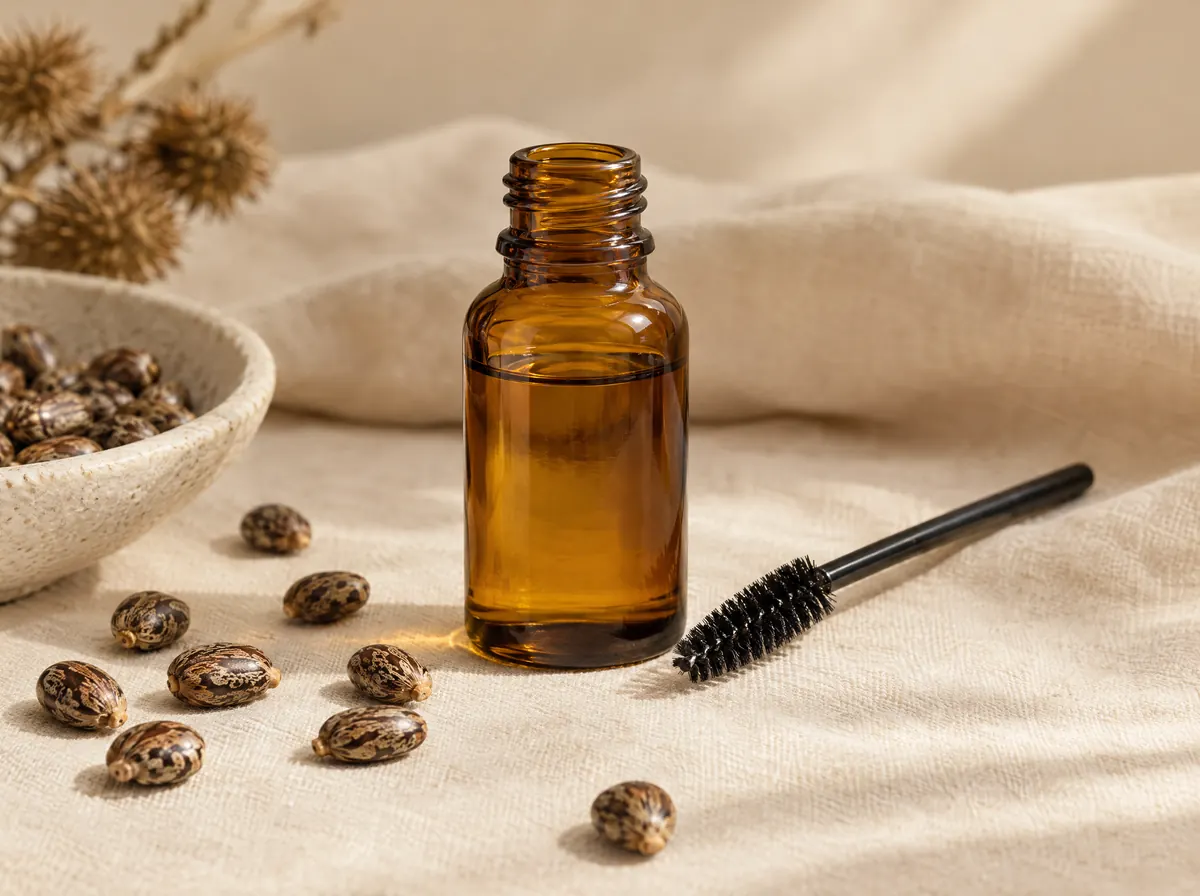
The evidence does not support a growth promise
Castor oil is often promoted as a cheap route to longer lashes. However, a review of eyelash-serum research found inadequate evidence to substantiate significant lash-growth claims for castor oil. An anecdote or a glossy-looking lash is not the same as a demonstrated increase in growth. Read the review of eyelash-serum evidence.
Our editorial conclusion is that castor oil should not be bought on a promise of proven lash growth. That is a judgment about the available evidence, not a claim that every person’s appearance will remain identical.
Why the eyelid research is easy to misread
A small randomized study evaluated periocular castor oil in people with blepharitis over four weeks and reported improvements in several eyelid findings. Its purpose was not to establish longer lashes in healthy cosmetic users. See the trial abstract.
A study title containing “eyelash” or “eyelid” does not automatically answer a growth question. Look at who was enrolled, what treatment was tested and what the researchers actually measured. An improvement in crusting is a different outcome from an increase in lash length.
Conditioning, appearance and growth are different claims
When someone says their lashes “look better,” ask what they mean. Shine, how hairs sit together and a genuine change in length are not interchangeable observations. Photos alone often cannot distinguish them.
For a useful growth claim, look for a specified formula, a defined treatment period and an appropriate measurement. Research on an ingredient elsewhere on the body does not by itself validate a lash product. Likewise, a finished product containing castor oil may contain other ingredients, so its results cannot automatically be attributed to the oil.
Do not turn a household oil into an eye treatment
FDA advises using only cosmetics intended for the eye area near the eyes, keeping applicators clean and not sharing eye cosmetics. Read FDA’s eye cosmetic safety guidance.
We do not recommend putting household or cosmetic castor oil into the eye or using a homemade mixture as an eye drop. A clinical eyelid protocol is not a recipe for self-treating dry eye, infection or lash loss. If one of those problems is your reason for trying oil, ask an eye care professional about the underlying issue.
How it compares with a lash serum
A packaged serum may provide clearer directions, a full ingredient list and product-specific evidence. Those are useful things to compare, but the word “serum” does not establish that it works. The same evidence questions apply to an expensive bottle and an inexpensive oil.
Before spending, decide whether your goal is a cosmetic appearance change or treatment of a new problem. For a cosmetic purchase, compare the stated outcome and supporting information. For unexpected lash loss or eye symptoms, a ranking cannot identify the cause.
A practical purchasing decision
If your reason for choosing castor oil is “it is proven to grow lashes,” the evidence does not justify that reason. If your goal is simply an inexpensive cosmetic routine, compare products actually labeled for use around the eyes and read their instructions.
Our under-$40 guide offers two alternatives to research. Our before-and-after guide explains how to evaluate the photographs used to sell any of these options.